Saturday, 3 December 2022

Are we are all delusional now?


Laughing Fool circa 1500, possibly by Jacob Cornelis van Oostsanen Wikipedia & Public Domain

A psychoanalytic movement recently offered an intriguing seminar interrogating whether "we are all delusional here?"

The colloquium was indebted to Lacan's musings about James Joyce, who may, or may not have avoided some devastating psychosis by novel-writing  and word playing. Nevertheless asking whether "we" 
are all mad "here" predated both James Joyce and Jacques Lacan.

But I don’t want to go among mad people," Alice remarked.
"Oh, you can’t help that," said the Cat: "we’re all mad here. I’m mad. You’re mad."
"How do you know I’m mad?" said Alice.
"You must be," said the Cat, "or you wouldn’t have come here.” 
Lewis Carroll, Alice in Wonderland

Occupants of Wonderland are by definition "mad"; but each in their own way. The Hatter is mad, though in a different way from the Red Queen.

Whereas the English language attempts some differentiation between illusion and delusion; continental French prefers the word Illusion which embraces both concepts and all degrees of the same. So one can reform Lacan's question to read whether all human subjects are immersed in some illusionary version of reality. If one wanted to talk about the delusions encountered in psychiatry, the choice words would derive from a variety of word. One of the greatest French diagnoses of the early twentieth century was "la folie des grandeurs"  or in English "delusion of grandeur"


Interrogating psychosis is a cultural undertaking of venerable age. How and why do  people with seemingly psychotic symptoms abruptly cease they display? One possibility highlighted by some, is that a more stable existence might be acquired by pursuing a hobby -like writing or art. Such a hobby is not simply a conduit for excessive thoughts, feelings, or energies. Nor is it simply a new dawn of creativity. Rather deep commitment to a creative hobby helps individuals to stabilise themselves socially, psychologically, and culturally. 

Unfortunately there have been people living within the structures or styles called psychosis who had hobbies, professions, meditations, and pursue keenly cultural endeavours; but nevertheless fail to stabilise. On might recall Lucinda Joyce. The promising avant garde artiste who was a promising, creative dancer, failed to make a career even with help from C G Jung and a succession of psychiatric experts. The Irish choreographer and historian of dance, Deirdre Mulrooney, wrote

Lucia Joyce dancing at Bullier Bal, Paris. May 1928. Photograph by Bernice Abbot (public domain)

 Not unlike Mary Wigman, founder of German Ausdruckstanz/Dance of Expression, after a few broken engagements, Lucia suffered a nervous breakdown. While Wigman survived her breakdown to become one of the most important modern dance practitioners of the 20th century, Lucia was incarcerated by her brother, and ended up trapped in mental asylums for most of her life, with many equivocal diagnoses, variously put in straitjackets, and once even injected with bovine serum. (Giorgio Joyce, quite a tragic figure himself, would also commit his ‘marvellously wealthy’ older wife Helen Fleischmann to a mental institution). Alas, Lucia’s father, her greatest champion and supporter, died when she was just 34. After his death, Nora never visited Lucia again. Giorgio only visited her once, in 1967. Go figure! Lucia outlived them both, until 1982, in Saint Andrew’s Mental Asylum in Northampton.

See: Reclaiming Lucia Joyce's legacy - The Lyric Feature 
https://www.rte.ie/culture/2019/0711/1061493-reclaiming-lucia-joyce-the-lyric-feature/


The distinction -whether structural or no- between florid psychosis and ordinary living enjoys an extensive practical history.


 In the history of European medicine, the greatest theorist of "melancholy" was the scholarly academic Richard Burton. He offered several typologies for melancholia: love depression is one, whilst religious mania was another. Russia, for instance, enjoys a proud history of holy fools One called Basil was

Naked, dirty & forever mumbling their prayers, they could proffer raw meat to a tsar, call him a bloodsucker and yet still be invited to a royal feast afterwards. Their “supernatural” powers inspired awe in nobles and peasants alike.https://www.rbth.com/history/331573-why-did-russian-tsars-love
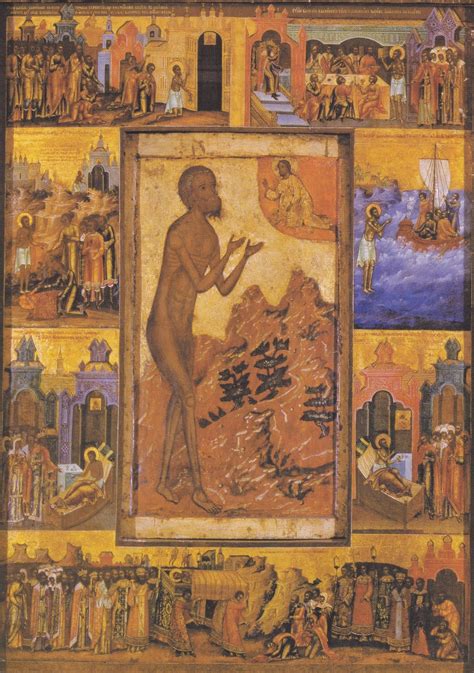

holy icons of st basil: fool of christ

Another question begging answers is the location and identity of the "we" in this quote. Most concepts relating to identity or location are slippy.  A valued colleague suggested to me how an innocuous everyday "we" can easily become a big or royal WE. Any therapeutic practitioner talking about a "we" - is referring to a bigger Other. This "we" thus resembles claims made by religious, political, and other social groupings when isolating a sanctioned authority along with an excluded minority.  resembling somewhat  the "cart and carriage" or "love and marriage. The we lends me an identity which nobody can tarnish, because the "we" of the Others is inviolable, absolute, and indubitable. Theories of religion refer to this epistemic style as "fideism". It is a near absolute  claim, encapsulating the All and the Others in a god, political belief, praxis, or imaginary group structure. 

Testifying about one's psychoanalytic experience obviously concerns chiefly my own experience, social being, history, including even my amazing professionality. But how can others be expected to ratify it?There is a circularity here when traversing from I to the We, thence to the Others and back again to myself. It resembles a solipsist wondering why there aren't more people that agree with her. Maybe it is easier to shut the discussion down because some allegedly foundational concept is being attacked. Fideism is a conundrum that creates and destroys its own truth and testimonies.


Everything I claim to be the case is- eo ipso- related to everything else. Hence my subjectivity is valid for all.... just as all Lacan's concepts are related internally as well as chronologically

Criticising Lacan or Freud is supposed to be both futile and contradictory. One is better to subjectivise their teachings. Interrogating writings from some futile "external" viewpoint means one is metamorphosed into an academic, philosopher, master, or super therapist. This position is reified. I cease being a Subject Viator -always in transit. Now I have arrived at my destination and destiny. Nevertheless it is sometimes imperative to interrogate. For example many speakers at the conference mentioned above thematised the concept of delusion. They teased out differences between psychosis or the "psychotic" by exploring regional ontologies for delusion.  Hence one might be exceedingly delusional, without necessarily adopting a full-blown psychotic style.

During the first fifty years of the twentieth century it seems to me that most behaviours, specialisms, and institutions  devoted to "the psychotic" were obscured, if not downright hidden from public interrogation in western civilisations. As the century proceeded psychological, analytic, and psychiatric words became more widely known and used, whilst pseudo-illnesses (such moral insanity, homosexuality, along with  supposed perversion, degeneration or stigmatised minorities).   

Eventually concepts of mental illness became banal during the following century. From the nineteen sixties onwards "mental health"  came to refer to an increasing public awareness of a previously hidden sector of society. I remember well when I began to work in the domestic department of one of the largest psychiatric hospitals in Europe as a stores labourer. The director of the hospital said to me at interview "I have some massive wards here that will terrify you". He predicted correctly; because he was referring to vast "psycho-geriatric wards" that shocked a boy of seventeen. They reminded me of the black and white
holocaust documentaries produced after the defeat of Germany and her allies that accompanied most of my childhood. 


A young boy walking along a roadside strewn with corpses in Dachau. Copyright Getty & also public domain


As novelist Beryl Bainbridge testified, the war was indeed over but the nightmares were just beginning.

WE WERE never taught about the war at school. Because my father's business friends in Liverpool were mostly Jewish, I actually believed that the war was being fought to save the Jews. I couldn't have been more wrong.

When the war was over we went to the Philharmonic in Liverpool. We got out of the train at Exchange station, then walked in a crocodile to the Philharmonic Hall in Hope Street and saw the films the troops had taken when they entered Belsen.

It was the most extraordinary, numbing experience - those little mummified skeletons which were just being pushed up by a machine, to be carted into pits ... I had nightmares for a long time afterwards. Independent  Monday 08 June 1998

Whilst many of my colleagues rightly explore the meaning and structures of delusions, my purposes here are more modest. I am interrogating the "we" and the "here" associated with the quotation about delusion.

The "here and now" of delusions that followed public images after the "Shoah" which incinerated innumerable Jews, communists, gypsies, and gays, has poignant currency still. Were Europeans delusional or even mad to inflict such destructiveness on themselves and their Others -even after the previous destructions of 1918!! The "now" can contract and expand its magnitude as required by its users. But I doubt it is a definable temporal concept because of its slippage and diverse composition of ideal, real, and fantasy formations.

Hence the "We" contracts and expands. During Bainbridge's paragraphs the "we" is a family, one's school pals, an educational establishment, a religious/ethnic minority,  and business associates. But it expands in time, in space.


 icon of basil

Tuesday, 19 July 2022

angels and sodomists

Sodomists and Angels

Renaissance sodomy was very different from anything encountered in contemporary Gay, Bi, Transgendered sexualities, communities, or subcultures.

Florence's incredible Ponte Vecchio is now the home of silver smiths, expensive tourist shops, exclusive perfumeries, and gentleman's outfitters. In Renaissance times the bridge was full of butcher's shops, the most prominent being those of owned by the Mazzante family. Three of the five butcher brothers were implicated in sodomy, whilst over fifty men, also wage earners on the bridge, were also investigated by civil authorities for sodomy.
 males engaged in sodomy came from across the social spectrum” and lists that laborers in textile production were the largest group of those denounced, with 24%; next were the clothing makers, 15%; then the other crafts, merchants, butchers, barbers, with 6.4%; followed by the clergy, 3.6%.

In other words so-called "sodomites" were not restricted to the  high art circles of Florence nor highbrow readers of Ficino's brand of Platonism. Whatever was meant by sodomy at that time, was practised by merchants, retailers,  and craftsmen. Indeed erotic relations between men seems to have been a fruitful means of patronage, promotion, commerce, and advertising. 

From the outset it must be noted that the definition of sodomy in European legal codes was highly variable. Maximally sodomy could refer to any form os sex that avoided reproduction. For this reason it is not surprising that heterosexual buggery should be labelled sodomy. Minimally, sodomy concerned sex between males with the recipients of so-called passive penetration being the worst of all..... as far as the city of Florence was concerned

Such value judgements arose because lacking any solid legal definition, alleged misdemeanours of sodomy originated in church laws and codes which classified as a "sin" and even here it was not completely obvious what sins of sodomy were. Secular courts had no theological moralists available to assist justices. Not surprisingly this "crime" fluctuated in both its meaning and the severity of sentences. In South Netherlands there were unusual prosecutions for sex between women. When tolerated male sexual performances they could used to promote patronage...for example using a particular butcher might be secured. Patronage through sex was not the preserve of high arts and learning. Furthermore, male on male sex was a social alternative to heterosexual sex when men did not marry until they were in their thirties. Buggering defeated males in war, seems to have been a summary means of humiliation, torture , and punishment during the ceaseless Italian wars of this period. This truly popular form of military rape was investigated only extremely rarely.


The madonna and child above are accompanied by two saints. One is Saint Peter, the other is Catherine of Sienna: a celebrated writer, visionary, and diplomat who underwent a "mystical marriage" with Christ. Saint Peter is commending the person financially responsible for the painting to the infant Christ and his mother. A familiar artistic trope is the infant functioning as a priest: here he is ritually blessing the donor -or backer- who is wearing the habit of a Carthusian monk.

Il Sodoma

The talented artist who produced this remarkable piece was  Giovanni Antonio Bazzi 1477-1544, usually associated with the  renaissance style of Sienna.Though once married, he soon separated and began to enjoy the company of "boys and beardless youths". He also loved pets. His home was full of all sorts of animals, as well as his beloved youth-boys.  Fine clothing too was affectation he brought to perfection through his tailors. His infamous nickname instantly became an occasion for self affirmation. In poems, musical tributes, and the like he praised "the sodomite"  -namely himself. So it isn't at all surprising that it became quite normal call him "il Sodoma" even when speaking to his face, as well as in everyday gossip. Like Oscar Wilde later, he loved being talked  about -especially salaciously! Il Sodoma was used by at least one Renaissance pope as a form of personal address and sign of affection to him.

There is just one supposed self-portrait of Bazzi. It depicts a slightly vain young man wearing cap, fine clothes, with flowing locks. He is looking across and sideways at us -perhaps seductively. It is not impossible that this image is mock-up or pastiche; by which il Sodoma paints himself resembling the style of an artist whom he greatly admired -the younger, and ascendant, Raphael (1483-1520).This image is to be found amongst a series of frescos dedicated to the achievements of St Benedict.


Detail of fresco St Benedict repairs a Broken Colander through Prayer.
This image is in the public domain and dated c. 1502

Maybe this is a self portrait after all. Nevertheless there is definite homage to Raphael's portraiture.


Raphael: Portrait of Agnolo Doni c. 1506 public domain

 
This nickname -Il Sodoma- is perhaps better translated into modern English by  "the paedophile" . This noun better catches the overtones of danger, sleaze, illicit sexuality, immorality, exhibitionism, public prurience, and illegality that constantly menaced men of his sort. Sodomite could be, like the more contemporary term paaedophile, a word encouraging anything from social approbation to public lynching.

Persecution and Cancelling Life

Sodomites were more than marginal oddities, curiosities, or liminal people. The Renaissance sodomite was regularly male and a suspect criminal easily targeted by churches, princes, states and public prurience. A guilty verdict could result in death by public burning, which was a punishment first recommended centuries ago in laws enacted by Theodosius.

The inscription in the upper body of this coloured cartoon reads

Verbrennung des Ritters Richard (Reichardt) Puller von Hohenburg mit seinem Knecht, dem Barbier und Lautenschläger Anton Maetzler am 24. September 1482 vor den Toren Zürichs (tatsächlich aber auf dem Fischmarkt) wegen Sodomie

The incineration of the knight Richard Puller of Hohenburg with his servant, the barber and lute player Anton Maetzler on September 24, 1482 at the gates of Zurich (but actually on the fish market) because of sodomy


Burning of Convicted Sodomites Zurich 
Die Grosse Burgunderchronik Diebold Schilling de Altere, circa 1483 public domain 
 

A pan-European campaign was regularly waged by papacy and curia against sodomy from the thirteenth century onwards. Death penalties were encouraged, revived, and special courts established. The item above depicts the state murder of Alsatian knight Richard Puller von Hohenburg and Anthony Mätzler, his servant. Having successfully avoided prosecution in Europe, Richard was eventually convicted by testimony extracted barbarically from a former servant who had become the knight's blackmailer and persecutor. The two men were burnt alive.

Individual principalities, as well as nation states, took over responsibilities from churches for investigating and punishing this crime of sodomy. One estimate argues there to have been seventeen thousand people tried for sodomy in Florence between 1432 and 1502. England lagged behind continental Europe; it was in 1533 that Henry VIII, both king and defender of the Roman faith, introduced the Buggery Act whereby felons received sentences of death by hanging. This punishment was mitigated by Victorian law-makers in only 1861.

Sodomy laws were a gift to those who wished to cancel, harass, and even kill rivals, enemies, or hated factions. Monarchs, princes, nobles, entire religious orders, as well as private individuals could easily be accused  -or rather "denounced" - as sodomites by using the legal machinations of the day. 

As far as Renaissance Florence was concerned, the body responsible for investing and prosecuting sodomy, prostitution, and public nuisance was an institution called Ufficiali di notte e conservatori dell'onestà dei monasteri or night officers. This organization founded in 1432 operated until 1502. They erected taboro (letter boxes) around Florence, explicitly used for anonymous accusations of sodomy. The populace was not only welcome to use the taboro, but were actively encouraged to do so and in some instances bribed to fabricate allegations. Cooperating with the Ufficiali was a laudable civic duty.

Between 1432 and 1502, its years of activity, about seventeen thousand men came to its attention (which represents a great number in a population of about forty thousand). The board and its morality police were regularly criticized for being too lenient, despite the seventeen thousand men that attracted its attention. At any one time the estimated population of Florence during the Renaissance was around forty thousand people. There appears to be an awful lot of sodomists in Florence during those seventy years or so!!

And here is the rub. It was difficult to determine precisely was "sodomy" was -especially in Florence. The full title of the night officers included the words  e conservatori dell'onestà dei monasteri. A literal translation of  this morality policing board is Night officers and guardians of the honesty of the monasteries. This reference to guarding the reputation of monasteries or convents was somewhat anachronistic even in the fifteenth century. But it is a useful indication that "sodomy" originated as a religious offence and one which is never precisely defined. It might include male to male sex, public sexual abuse of minors, incest within families, opportuning, tavern brawling, rent boys, as well as "prostitution" and political discontent. Something similar seems to have been the case at the Parliament of Paris: sodomy was an incredibly difficult offence for secular authorities to prosecute.

Nevertheless there was one particular form of sex that received official censure in Florence. Any male admitting to (or accused of) being passive during anal sex, earned severe condemnation and punishment -if proven. But even this censure of popular morality was capable of being treated ironically and even comically by the accused when they came to court. Linking sodomy with passive anal penetration, had the unforeseen consequence of allowing courts to exercise leniency in relation to all other indictments of sodomy. Compared to receiving anal penetration, everything else became less serious and less threatening to the well being of the populace. Such were the confusions surrounding sodomy, that heterosexual couplings practicing buggery could be forced to appear in court.  It is not surprising therefore, that the bye laws governing the activities of the "Night Officers" were constantly changing, calls for stricter punishments and policing for ever forthcoming, and spurious allegations or confessions traded for acquittal or conviction of some minor offence. Nevertheless morality policing in Florence achieved several thousand convictions during the seventy years of existence. Involvement with them could be disastrous. Amongst German-speaking peoples the word Florenzer became a euphemism for sodomite.

Of course a certain amount of forbearance and ignorance was feigned by religious or state authorities. They took cases one by one. Protection might be afforded to gifted court artists for instance; yet this was arbitrary but patrons could not be relied upon indefinitely. The artists featuring in this piece -those creating images of a sodomising or feminizing nature- may well have been at the cutting edge of risqué art. But they were nevertheless situated precariously as far as law and punishment were concerned. This needs to be remembered in any discussion involving Leonardo, himself denounced to court officials as a sodomite in 1476, albeit anonymously. It is only for that reason he escaped conviction.

Monna Vanna by Giacomo Caprotti da Oreno (Salaí) c. public domain

This image above is of a painting known as Lady Vanna -or Monna Vanna. For a considerable period of time it was called "the nude Monna Lisa". Personally I find little resemblance to the features of Mona Lisa in this painting. To me it seems a rather camped-up version of the world-famous painting in the Louvre. A feminized male no less; though admittedly executed with some sensitivity and homage. Nevertheless the hands and fingers of the image seem awkward and wooden. There is something outstandingly odd about the breasts as well. They seem like add-ons or "after-thoughts": as if painted onto an originally male torso. Without breasts, this image might just work as male. There is still speculation that beneath the Vanna lies a cartoon sketch by the hand of Leonardo himself.

There is a belief that the facial image of this Monna Vanna resembles closely a favourite model of Leonardo's who featured in his portrait of John the Baptist


The name of this man was Gian Giacomo Caprotti da Oreno called for short "Salai"; a loyal pupil of Leonardo's for some twenty five years. He entered the master's household at ten years of age eventually becoming muse, model, and pupil. The old man bequeathed art to his former "little devil", as well as farming land in Italy.

At this juncture it is necessary to state the obvious. Many female portraits by Leonardo are definitely not ambiguous or androgynous. His subjects often are shown to be womanly, sexual, young. They are depicted desirable, desired, and desiring in a new style that was seemingly classical, but at once more subtle, more real and ..... more feminine. There is no need to labour this.

A third sex?

During the Renaissance another human variant, this time androgyny, was becoming increasingly fashionable for another class of beings, namely "angels". These were the traditional messengers of God, bird-beings, at once human and non human, were challenges to contemporary sciences and enquiring minds. Leonardo was fascinated by them: especially their abilities of flight and locomotion. In renaissance Italy it was entirely expected that contemporary human beings would soon fly with the aid of wings, machines, or both. Similarly in twentieth century in America it was possible to celebrate enormous technological advancements, yet at the same time to believe people were regularly abducted by aliens. Renaissance scholars knew well how some angelic beings had gendered forenames, like the famous St Michael, others seemed quite ambiguous. Angelic beings fascinated Leonardo artistically, scientifically, and anatomically.  Because they neither married nor reproduced, did they have genitals? Were they perhaps eternally confined an everlasting adolescence? If they did not eat either, what would their internal anatomic and physiological features be? How do their remarkable pinions work?

One of the great moral traits of angels was their obedience: invariably and unquestioningly did they obey G/god's orders, delivering all divine messages without demur. Another angelic attribute was this: adoration. They hymned god's praises ceaselessly with immense artistry and skill using all sorts of musical instruments and not just harps. On the other hand they could be as devastating as any nuclear arsenal with destruction, punishing, or rescuing being their chief activities when the end of a universe was commanded. War and its instruments were a pressing technological concerns for Leonardo too; his income often depended upon his abilities to design weapons of attack and means for defence. Flying machines might be a great asset in any war. So interest in angels was a practical military concern; and not purely aesthetic. Thinking about angels could be likened to contemporary weapons technology. Indeed  the bloodiest characters in the final mass destruction of the Apocalypse are angels:

Jede Engel ist schrecklich
R M Rilke


One of Dr Who's weeping angels (from BBC America)


completed 18/3/2023
Angels to follow 


Some Readings:

George Armstrong  Forbidden Friendships: Homosexuality and Male Culture in Renaissance Florence. Review of Rocke's book. Los Angeles Times Nov 2 1997

Judith Brown Immodest Acts: The Life of a Lesbian Nun in Renaissance Italy  1986 OUP

Fernando Cascai Scrutinizing Historiography: From Pederasty to Sodomy to Homosexuality to LGBT/Queer Sexualities. Published in `Fascination of Queer edited by Ramello. Interdisciplinary Press 2011

Marsillo Ficino Commentary on Plato's "Symposium" on Love Translated by Sears Jayne. Second Edition Paperback. Spring Publications 1983

Cathrine Fletcher: The Beauty and the Terror: An Alternative History of the Italian Renaissance 2020 Vantage

Jamie Gemmell Homosexuality in Renaissance Florence: The Ambiguities of Neoplatonic Thought. not dated ......

Meridith J Gill Angels and the Order of Heaven in Medieval and Renaissance Italy CUP 2021.

Hamilton, Tom (2020) 'Sodomy and criminal justice in the Parlement of Paris, c.1540-c.1700.', Journal of the history of sexuality., 29 (3). pp. 303-33

Hamilton, Tom (2021) 'A sodomy scandal on the eve of the French Wars of Religion.', Historical journal., 64 (4). pp. 844-864.

Hidden Florence https://hiddenflorence.org 

Μary McCarthy: The Stones of Florence Mariner Books 2002

Alex Mills Leonardo An opera for the Victoria and Albert Museum 2019 http://www.alexmills.info/leonardo

Michael Rocke, Forbidden Friendships: Homosexuality and Male Culture in Renaissance Florence. Oxford University Press, 1996. 

Jonas Roelens ‘Visible Women. Female Sodomy in the Late Medieval and Early Modern Southern Netherlands (1400-1550)’, BMGN/Low Countries Historical Review 130, no. 3 (2015):
3-24.

Jonas Roelens 'A Woman Like Any Other: Female Sodomy, Hermaphroditism, and Witchcraft in Seventeenth-Century Bruges', Journal of Women's History 29, no. 4 (2017): 11-34.

Jonas Roelens Gossip, defamation and sodomy in the early modern southern Netherlands (2018) RENAISSANCE STUDIES. 32(2). p.236-252

Men had to live closely with other men from all classes during battles which were often ferocious, bloody, and rapacious. Male rape was frequently alleged during the innumerable Italian Wars. Allegations were sometimes high-jacked by military interests, which were quite capable of manufacturing them as well. Catherine Fletcher is a reliable guide here.

Monday, 27 June 2022

TALKING TO BRICK WALLS 1 Text


Staffordshire Moorlands Find

PREFACE

By accident, rather than design, this contribution offers a minor footnote to the themes of displacement and condensation presented by Paul Melia last month in his exposition of Hockney’s  Chair and Shirt dating from1972.

This presentation was originally entitled, talking to brick walls, but instead of the plural "walls" a singular "wall" was substituted. Also omitted from the flier was my subtitle namely, the joys and necessities of not hearing and misunderstanding. 

However these substitutions, alterations, or misplacements may have occurred, the notion that they do so inevitably is my theme. 

After completion I discovered that another unconscious title was guiding me: namely delusions about my empathy!!


***********

The Berlin Wall, which fell in November of 1989, was not just a wall. It was a gigantic symbolic structure pregnant with meanings,  aspirations, and agendas of international, cultural, and political dimensions. Likewise it’s fall, or rather spontaneous demolition, became a historic event well-deserving a myriad of interpretations and significations. When the wall fell I was working at a drugs detoxification unit and involved in an infectious diseases ward offering treatment to dozens of young women and a few young men. They had in common bleak prognoses because of HIV/Aids.  So long ago may be; yet after the corona virus pandemic and contemporary events in Ukraine, the current devastations felt to me like “more of the same”

On the ward I was asked to see a young man in his early twenties, whom staff believed would die soon. The conversation suddenly turned to the Berlin wall, political events in Europe, and a controversial AIDS campaign launched by Mrs Thatcher’s government. The young man linked the events surrounding the Berlin wall with deep anxieties about his own life. I asked him one question. Was he worried whether vast amounts of refugees  from behind “the iron curtain” might flood Britain and decimate scarce health resources? After that I returned home. A few days later, several nursing staff greeted me like a hero!! Immediately after my visit the young man took a shower, demanded to return home, and became eager to live. Reflecting on this, I decided my miraculous powers of empathy had contributed greatly to his dramatic reversal of mood and behaviour….. as if I had somehow 
"facilitated" a liberation from his own entrapping walls of sickness, treatment, and reversal!!

Signifiers

A signifier is a word used by a speaker or writer. The signifier/word does not necessarily refer to any real thing, internal state, or even a personal thought. If a signifying word refers to anything, it refers to another word or set of words. Hence “wall” can signify a Berlin wall, loneliness, or the impenetrability of another's discourse. As Oscar Wilde acknowledged having one’s own linguistic walls can be both fun and protective.

One problem with signifiers is that their interpretation, expansion, contraction and general usage completely depends on others.  For instance "wall" might suggest some other person’s lack of response, their inability to understand. Alternatively I could say how addressing a benefits adjudicator a was like “banging my head against a brick wall”; indicating thereby how s/he failed to understand adequately and how annoyingly aggressive it was.

The issue then is this: signifiers can never easily become fixed by fundamentalisms. When I express my annoyance at not being understood, it might well be due to the fact that I have no control how anOther -or group of Others- use the same words I utter.

During the previous seminar Paul Melia talked about Hockney's  chair and shirt . It was an apparently empty chair in an empty room. “Apparently empty” because resting on the chair is an item of clothing belonging to Hockney’s previous partner. The chair’s “emptiness” might now signify  -or be associated with “loss” “grief” "emptiness" “gap”. The more Paul examined this painting,  its significations became all the more rich and expansive, embracing classical madonnas, a bird that brings babies, a parrot, and inspiration by some deity.  So the painting becomes a treasure house of signifiers as soon as we begin to talk about it carefully.

In relation to words and discourse, then, you have little control over how your signifiers become used by others. They will certainly multiply or modify (ie. bring their own associations)  one’s original words and symbols. 

Signifiers -and the process of signification- inevitably involves loss and misunderstanding. For example “follow the science” was a snappy phrase associated with the recent pandemic. But which science? How much is medicine a science anyway, and how much an art? Could the science in question be virology,? Equally important  for pandemics is epidemiology. Moreover, what does “follow” and who organises the followers.

What I am attempting to convey is this. As well as enriching language, signifiers also kill, cancel, and change your original choice of words and your meanings... without your permission or even consultation. Whoever invented the pithy saying about “following the science”, for example, may not have expected it to become common property ridiculed and eventually annihilated by thoughtful journalists.


Military Baths at Vindolanda public domain

Really psychoanalysis is a very silly method. Its customers are encouraged to speak whatever comes to their attention. If one is lucky or daft enough, one produces sequences of signifiers and thereby constructs a few links of a signifying chain. Nevertheless spontaneously producing a procession of signifiers is also be scary. It is as if your verbal associations are starting to control you and your meanings.

Metaphors

I am attempting to convince you how  signification just happens -whether you want it or not. Some words or associations to which I give voice, may be well be embarrassing, unpleasant, envious, rude, desiring. In themselves it is obvious that associations and signifiers are not ethical entities, but  often become so for users. So when customers began analysis, Freud encouraged them to speak out their words  boldly: without censorship, avoidance, or rephrasing. A golden rule which it is far easier to recommend than to use.

There are different sorts of metaphors in English, but to make things simple for I rely on a definition from BBC English education:

A metaphor is a way of describing something by saying it is something else


For example: you are my sunshine. Or the Hebrew bible testifies:

“He will cover you with His pinions,
And under His wings you may take refuge;
His faithfulness is a shield and wall”

If there is a God, s/he/it, may or may not have wings: but how come faithfulness  is “a wall”? Evidently this wall-faithfulness of believers is very different from the inhabitants of Jericho whose “walls came a-tumbling down”. Just one sex worker survived the onslaught.

The metaphorical value of the supposed impenetrability and strength of walls is illustrated brilliantly in Mohja Khaf’s collection My lover feeds me Grapefruit

Your heart is a wall on which I knocked
looking for a door, a latch
a windowsill, a flowerpot
Everything I brought to the wall dried up
and blew away for lack of answer:
tulip bulbs, my worry for you, some children
Sometimes I pounded it with my fists
smashed my forehead on it
blamed myself for not having the passcode
hated myself
hated hating myself—started over
willed patience, got advice
cried in a heap against its brick
without getting a stir
so many night-after-nights
It’s a wall.
There is no way in.
Now that I’ve made the choice to leave
your heart suddenly has a gate
You fling it open for the first time
but I’m gone


Wall Words as Failing & Falling

As a very young child I remember watching a black and white television programme about Winston Churchill. For me the most memorable thing about the entire documentary was a wonky he once built.

Metaphors and signifiers, I am attempting to convince you, as well as expanding and enriching ones language also fail and fall. There is no guarantee that the previous signifier (or metaphor) of a set, retains its “originality”  when somebody -or anOther/s-  adds to it, compliments it, changes it. 

Walls, like Hadrian’s ancient Wall in Northern England, do not stay the same for ever. This, our very own local wall, was completely ignored during the  early years of Hadrians successor.. but eventually bits were used. Much later in history parts if it were recycled in the eighteenth century by General Wade to build his military roads hastening troops on their way to crush the Jacobite rebellions in Scotland. His "success" was celebrated in an additional verse to the national anthem.


Lord grant that Marshal Wade
May by thy mighty aid Victory bring.
May he sedition hush,
And like a torrent rush,
Rebellious Scots to crush.
God save the King!

Living in an increasingly visual culture, it is crucial to remind ourselves that words are heard, have sounds, rhythms, inflections. They can also be depicted. In this they share some attributes of internet memes. Take this example from Hadrian's time

MAISCOGGABATAVXELODVNVMCAMMOGLANNARIGOREVALIAELIDRACONIS

These letters are taken from the rim of a pan or beautiful pot discovered in 2003. It is contemporary with Hadrian's wall

To read the signifiers one needs to separate letters to form words:

MAIS (Bowness-on-Solway) 
COGGABATA (Drumburgh) 
VXELODVNVM (Stanwix) 
CAMMOGLANNA (Castlesteads)

But  the remainder:

RIGORE VALI AELI DRACONIS 

demands extra effort.

Just as walls might fall, develop chinks, get rebuilt, renamed, or recycled: so do signifying words. They often change when I repeat them to myself; but even more so when the Others take them over.

The Greek word verb μεταφορειν  from which our metaphor has to do with moving: often from one place to another. Translation also can be a moving or replacing of words and associated meanings. Though  metaphors (and extended metaphors) doubtless recreate and refashion  language: there is also a loss, if not several losses: evident in my own reconstruction of -and associations with 

 RIGORE VALI AELI DRACONIS

Draco could possibly be the personal name -or nickname- of a soldier posted to Hadrians Wall (wallus)  who perhaps commissioned the pot -along with its meme-like inscription- as a souvenir to take home. The phrase might also have a multicultural reference because Dracon (snake or crocodile) could also refer to the special insignia -or alms- of a troop Roman soldiers. The wall itself may be fierce, strong or dragon-like. Finally, it is likely native people living immediately north and south of the border wall  (-around Cumbria-) spoke Welsh. The red dragon (y Dragaig Goch) was embodied in countless native myths.


MetaForm-Moses

This is a neologism, possibly invented by myself whilst preparing for tonight’s contribution.  Another neologism once upon a time was the literary genre “tragicomedy”. A tragedy with a happy ending one might well say. Pyramus & Thisbe, was a an ancient tale constantly retold, the oldest written version is recorded in Ovid’s
Metamorphoses dated around 8 CE. It is a story about forbidden love that ends messily due to a series of assumptions, misidentifications, and guesses so that one lover kills himself. After a period of ritual mourning the female lover kills herself too. So there are a number of transformations in this story: from love to death for instance. 

The changes celebrated by Ovid's book are usually biological transformations. The originally white berries of a mulberry tree are changed blood red in honour of Pyramus who stabbed himself under a mulberry. Yet the Mechanicals’ adaption turns Ovid’s tale into pure comedy, if not farce.

Back to my confusion and neologism. 

This talk is billed on you website as “talking to a brick wall” which may well have originated with me. This phrasing is close to a popular idiom, often used with sarcastic and critical intent. It is also a singular word “wall”. 
The plural is admittedly odd: it alters a common idiom "talking to a brick wall" quite considerably. It is inconceivable that one might repeat the experience of wall-talking and make habit of it! Few will want to try-out conversions with different walls to savour the results.

Maybe a repetition of wall-taking is accompanied by a delusion, a hope, need, or compulsion so that “this guy is driven to talk” at walls!! Maybe he expects some life-affirming replies from the walls!

My fingers refused to type “metamorphosis” (change of form, like pupae become butterflies). Instead my mangled version of the word persisted. Somehow I wanted to combine: metaphor, signifier, changes, literary forms, and Moses.

I may well be over labouring my point here (unlike the Mechanicals in  
Midsommer Night's Dream  who manage most things comically).  When words are passed from one person to another, one culture to another, there are great gains, losses, mistakes, but always transformations. Some transformations are hidden for a while … others forever!

I hope the “brick walls” of my words, my Welsh ancestors, and my signifiers in general have been of some use to you this evening.

June 30 2022.


Note: from the internet resource wordsense

“This is the meaning of dracō:
draco (Latin)
Alternative forms
dracco
Origin & history
From Ancient Greek δράκων ("serpent, dragon").
Noun
dracō (genitive dracōnis) (masc.)
A dragon; a kind of snake or serpent.
The standard of a Roman cohort, shaped like an Egyptian crocodile ('dragon') head.
The astronomical constellation Draco.
(ecclesiastic) The Devil.
Usage
Draco usually connoted larger sorts of snakes in Classical usage, particularly those which seemed exotic to the Romans. One traditional rule gives the distinction among the various Latin synonyms as anguis being a water snake; draco being a "temple" snake, the sort of large, exotic snake associated with the guardianship of temples; and serpens being a common terrestrial snake. This rule is not universally credited, however.
Derived words & phrases
draconarius
draconigena
dracontarium
draconteus
dracontia
dracontium
dracunculus”
https://www.wordsense.eu/draconis/


Tuesday, 17 May 2022

TALKING TO BRICK WALLS 2 Some notes, pics, and texts


I like talking to a brick wall—it’s the only thing in the world that never contradicts me  
Oscar Wilde


Friday July 8th 2022
18.30 Northwest Regional Psychotherapy
Association

https://www.nwrpa.org.uk


Talking to Brick Walls
or 
the joys and necessities of not hearing
and misunderstandings


a contemporary meme:


joyReactor & public domain


public domain: Pyramus, Thisbe, and Wall by Riverside Shakespeare Company 1978  
the mechanicals perform a tragic play within a play about a dream


BOTTOM

There are things in this comedy of Pyramus and
Thisby that will never please. First, Pyramus must
draw a sword to kill himself; which the ladies
cannot abide. How answer you that?

SNOUT

By’r lakin, a parlous fear.


STARVELING

I believe we must leave the killing out, when all is done.

BOTTOM

Not a whit: I have a device to make all well.
Write me a prologue; and let the prologue seem to
say, we will do no harm with our swords, and that
Pyramus is not killed indeed; and, for the more
better assurance, tell them that I, Pyramus, am not
Pyramus, but Bottom the weaver: this will put them
out of fear.


QUINCE

Well, we will have such a prologue; and it shall be
written in eight and six.

BOTTOM

No, make it two more; let it be written in eight and eight.

SNOUT

Will not the ladies be afeard of the lion?

STARVELING


I fear it, I promise you.

BOTTOM

Masters, you ought to consider with yourselves: to
bring in–God shield us!–a lion among ladies, is a
most dreadful thing; for there is not a more fearful
wild-fowl than your lion living; and we ought to
look to ‘t.

SNOUT

Therefore another prologue must tell he is not a lion.


BOTTOM

Nay, you must name his name, and half his face must
be seen through the lion’s neck: and he himself
must speak through, saying thus, or to the same
defect,–‘Ladies,’–or ‘Fair-ladies–I would wish
You,’–or ‘I would request you,’–or ‘I would
entreat you,–not to fear, not to tremble: my life
for yours. If you think I come hither as a lion, it
were pity of my life: no I am no such thing; I am a
man as other men are;’ and there indeed let him name
his name, and tell them plainly he is Snug the joiner.


QUINCE

Well it shall be so. But there is two hard things;
that is, to bring the moonlight into a chamber; for,
you know, Pyramus and Thisby meet by moonlight.

SNOUT

Doth the moon shine that night we play our play?

BOTTOM

A calendar, a calendar! look in the almanac; find
out moonshine, find out moonshine.


QUINCE

Yes, it doth shine that night.

BOTTOM

Why, then may you leave a casement of the great
chamber window, where we play, open, and the moon
may shine in at the casement.

QUINCE

Ay; or else one must come in with a bush of thorns
and a lanthorn, and say he comes to disfigure, or to
present, the person of Moonshine. Then, there is
another thing: we must have a wall in the great
chamber; for Pyramus and Thisby says the story, did
talk through the chink of a wall.


SNOUT

You can never bring in a wall. What say you, Bottom?

BOTTOM

Some man or other must present Wall: and let him
have some plaster, or some loam, or some rough-cast
about him, to signify wall; and let him hold his
fingers thus, and through that cranny shall Pyramus
and Thisby whisper.

emphases added by msf.


a  fissure, gap, or hole? (in the former Berlin Wall: public domain)


The Staffordshire Moorlands Pan


public domain & British Museum 

The text reads
MAISCOGGABATUXELODUNUMCAMMOGLANNARIGOREVALIAELIDRACONIS


Sir Winston Churchill building a wall
public domain: Australian bricklayers recruitment site


Some Reading & Viewing


Wim Wender Wings of Desire 4K Restoration 2022
https://www.youtube.com/watch?v=0iAzYofuItM&t=95s

Ted Hughes Pyramus and Thisbe in Tales from Ovid  1997

RSC Faerie Abduction: The Mechanicals' Untold Story Video undated.
https://www.rsc.org.uk/midsummer-festival/faerie-abduction-the-mechanicals-untold-story

BBC revision guides on : metaphor, simile, analogy etc
https://www.bbc.co.uk/bitesize/topics/zfkk7ty/articles/zxk7kty

Four Walls is a suite of vocal and piano music by John Cage commissioned by the choreographer Merce Cunnigham in1943/4. The form was hybrid; the production required music, dance, spoken word and stage action. In 2022 a new recording appeared.

Talking to a brick wall Meme: https://www.youtube.com/watch?v=l5jq7iQsxQg

Jacques Lacan: Lecture On the Bo
dy. Yale University 1975.

Here Lacan produces a knot with four rings. Three rings represent the individual's Symbolic, Imaginary, and Real worlds. The fourth ring becomes the symptom your clients are trying to express or complain about in their own words, narratives, gesticulations, writings, or songs.


A brief note on Wittgenstein.

  Wittgenstein in 1929 photograph in public domain Wikipedia My appreciation of this philosopher was enhanced even more by the recent public...