Thursday, 5 September 2019

ISLANDS, HOLES, LACKS: towards a psychoanalytic cartography.


 Maestro dell’Osservanza, Burial of Monica at Ostia and departure of Augustine to Africa (c. 1430). Cambridge, Fitzwilliam Museum


yet was I constrained to conceive Thee ... as being in space,
whether infused into the world, or diffused infinitely without it.
Because whatsoever I conceived, deprived of this space,
seemed to me nothing,
yea altogether nothing,
not even a void as if a body were taken out of its place,
and the place should remain empty of any body at all,
of earth and water, air and heaven,
yet would it remain a void place, as it were a spacious nothing.......

........whatsoever was not extended over certain spaces, nor diffused, nor condensed, nor swelled out,
or did not or could not receive some of these dimensions,
I thought to be altogether nothing.

 Confessions Book 7 Translated by E B Pusey


HOLES, ISLANDS, LACKS
towards a psychoanalytic cartography

How many spaces are there in a hole?

This might seem a strange question; but  naive and seemingly daft questions are decisively important and greatly welcome in the practice of psychoanalysis. From a non-analytical stance  interrogations like this are obviously stupid   or -even worse- childish.

There is an almost unending seam of rich associations about negotiating holes or spaces using words like penetrating, exploring, trapped and , a favourite of mine, “falling”  .. especially falling in love or falling from grace. From where does one fall? Does one fall into something ready made? How far does one fall and can one return to the position one fell from.  Perhaps a phantasy can be invented about some reassuring place to land. Maybe it is the act of falling itself that is important: whether a free-fall lacking  parachute and safety net, or  alternatively, an unknown emptiness into which one is being sucked. Conceivably one may be falling into some sort of hole.

It is frequently claimed that Freudian theories suggest that “unconscious” (whether noun, adjective, or proper noun) lacks the ordinary qualities associated with time: chronology, biology, history, geology. Freud himself felt  the unconscious did not want to know anything of death and therefore believed itself to be immortal. Jung too of course, postulated an immortal unconscious; however it was far more of a social network than the Freudian unconscious ever dreamt of. Freudian belief in endless survival seems to have functioned primarily as a necessary protection helping sentient biological entities survive the shocks of infancy, childhood, as well as the constant hazards from outrageous fortune. Jung by contrast believed deathless unconscious to be real. It constituted an immortal collectivity. 

If the unconscious functions in ways that ignore chronological or biological time, it can -indeed must- function with spaces that are associated, then dissociated, with varied experiences time.

This is particularly evident in Freud’s fascinating theories of trauma which became increasingly rich and complex. His theories suggested that emotional shocks can be nachtraeglich  (pulled backward). I would like to add that such trauma are also cable of being vortraeglich (pushed forward), as well as nichtraeglich (cast away in denial, postponement, disgust). There are several other more modalities in addition to these three that will de-sequence usual parameters of experience. Most of these ingenious modalities therefore revise, reverse, and bend times; but as well they reconfigure the cartography of spaces.

Back in the nineteen sixties Melzter and Blick suggested that the “life-space” of children was structured by several different geographies.

The geography of the life-space of the child and the unconscious is really in four layers. There is (1) the outside world, (2) the inside of his objects in the outside world, (3) the inside world, and (4) the inside of his objects in the inside world. In order to understand the child’s material thoroughly, we must distinguish whether the object relationship we are seeing is going on inside an object or outside it, and whether that  􏰜field of action is in the inner or outer world (Meltzer & Bick, 1960, pp. 39– 40).


Later Meltzer was to add a fourth spacial co-ordinate: the ‘nowhere’ of delusional spaces. Then in 1992 these speculations reached a climax with Meltzer’s  Claustrum; an aspect of which one writer characterised as “The Dungeon of Thyself”  (Roger Willoughby 2001) This work begins a cartography of entrapments, rich in content and worthy of more attention. The poet John Donne had another melancholic space well before Meltzer: at times his body was his grave.

Now it would be slightly silly to dismiss Meltzer on the grounds that he is not a Lacanian or -from another perspective- because he was not an Independent. Be that as it may, his theorising need not be tied to object-relations, however those may be conceived. It is quite legitimate to interpret some of Meltzer’s spatial co-ordinates in terms of phantasies about bodies and their geographies -one’s own body, its living and phantasy spaces, its entrances and exits, as well as the bodies of others with their exits and entrances. The notion that the body may occupy a prison-space is an idea well known in the West from antiquity. In these "nether regions" the individual is subject to seemingly capricious chances and changes of outrageous fortune, daemons, jinns,  gods, or aliens. Living in such punitive spaces, will naturally signal anxieties, fears, desperations. Beings inhabiting such spaces (whether imaginary or real)  begin to define themselves as criminals, victims, or rejoicing in a "perverse" sort of way at being damned for the glory of a god, a state, an ideology.

As well as entrapments, spaces may offer the opposite. They are ex-trapments. Nowhere is there a place to be held and be holden. At its most radical the subject free falls with no abiding objects or supports. As an alternative to falling, there are meandering trajectories within spatial mazes leading to many nowheres, repetitions, returns.

One space that both entraps and releases its subjects is the island that likes to be visited. This is utterly different from the popular TV programme Love Island or Michel Houellebecq's novel The Possibility of an Island. In a drama entitled Mary Rose, by J M Barrie, Mary Rose is a character who suffered the great misfortune of having vanished, not once, but twice. As a child Mary Rose disappears on a remote Scottish Island whilst on holiday with her father. Barrie’s stage directions demand the space of the stage should be turned into an eerie spectacle.

All of this room's past which can be taken away has gone. Such light as there is comes from the only window, which is at the back and is incompletely shrouded with sacking. For a moment, there is a mellow light, and if a photograph could be taken quickly we might find a disturbing smile on the room's face, perhaps like the Mona Lisa's, which came, surely, from her knowing only what the dead should know. Scotsman 2008

The seemingly unfortunate Marie Rose disappears whilst her dad is fishing in a rowing boat. The entire tiny island is searched, but no little girl is found -dead or alive. Several weeks later the child miraculously reappears alive and well, but completely lacking any recollection of her disappearance: whether of duration or location. Ordinary time and space were absent from her and she from them. Later Mary Rose, now a wife and young mother herself, yearned to visit the Island once more. She persuades her husband to take the small family on holiday there -just as her father had done previously. Inexplicably history repeats itself; the entranced wife and mother disappears, just as before. On this occasion she was not absent for a just few weeks. Marie Rose did not reappear again for several decades. Like the previous disappearance, she had no recollection whatsoever of of her absence. Neither had she aged biologically in-between-times. Her once infant son was now older than Mary Rose when his mother reappeared.


The Scotsman published a fine article to mark the 2008 revival of Mary Rose in Edinburgh. Its Sitz-im-Leben of the play was 1919, written immediately after the Great War, when themes of loss and disappearance were inescapable realities for battle-decimated Europe. 

Long before critiques of arrogance, orientalism or anachronism, Barrie’s play rejected firmly Victorian ideals about the civilising mission of the West throughout time and space. Industrial progress, railway timetables, standardised Greenwich Mean Time, maritime gazettes were dispensable; as were the countless bodies lost on the battlefields of the Somme. Urban myths rumoured that certain of these bodies temporarily reappeared in etherial seances of spiritualist mediums after 1919, catering to the needs of grief-stricken parents, wives, lovers and siblings. The mere possibility of there being parallel times and spaces, was certainly a comfort. It was also an irritating torment too -like the knowledge of death Barrie attributed to the smile of Mona Lisa.

The notion of ageless bodies still remains a national emblem in the United Kingdom repeated every year in its solemn Remembrance Day:


They shall grow not old, as we that are left grow old;
Age shall not weary them, nor the years condemn.
At the going down of the sun and in the morning
We will remember them

In the sixth stanza of Binyon’s war poem, the bodies of those killed in battle appear to enjoy some sort of physical transcendence:

But where our desires are and our hopes profound,
Felt as a well-spring that is hidden from sight,
To the innermost heart of their own land they are known
As the stars are known to the Night;

The lost bodies have their own being in a space hidden from sight. Barrie’s play about Marie Rose entertains similar hopes. Though her two disappearings were shocking, unexpected and frightening, Marie’s body strangely retained an ageless identity; in between times she seems to have entered states of rupture, enthralment, and maybe rapture.

Barrie himself loved the countless rough islands surrounding his beloved Scotland which had been his holiday haunts. Other characters created by Barrie -like Peter Pan, Tinker-bell, the Lost Boys- also live on an island. This island is called “Neverland” -a name perhaps, recalling one of Meltzer’s  delusional spaces.

“Island” is an important trope in both of these works by Barrie. It is a motif calculated to exploit several sets of liminalities. For example, a local native who rows Marie and her husband to the Island is whole-heartedly Scots Presbyterian; indeed he is preparing for ordination. Strange though, he is wary of presences on and rumours about the Island: as if the pre-Christian Celtic world was somehow still alive there. The island is liminal geographically as far as the mainland is concerned; and no human beings live there. In both play and novel, islands also become metaphors for liminal times and spaces. Bodies on the Island resemble the Dasein of Heidegger, the Island itself a das Sein that dictates time and being according to its own capricious rules of presence and absence. It loves to be visited; but the love of this liminal space is unreliable and unstable. Anybody who loves visiting it is in great danger. The love the Island has for its own visitors is seductive, capricious, cruel. It's "love" seems to veer towards perverse, atavistic, allurement.

So far this essay has mentioned several liminal geographies with strange spacial co-ordinates: an island of childhood adventure, the body  imprisoned, the delusional spaces of Neverland, and an ageless home for fallen warriors. In addition to the multiple spaces of Meltzer's psychology, the poet John Donne, felt his body to be a living in grave during a bout of melancholy; his body eventually became its own grave, whilst the ceiling of his study was the roof of his tomb. The tract, Biathanatos, written in 1608, though published later, was a radical revision of legal and religious rationales prohibiting suicide. Biblical figures like Sampson, Saul, and Judas Iscariot had willingly practised what he called Self-homicide. Indeed Jesus himself may of practised it too. The Christ of scripture and tradition, seemed hell-bent on going to Jerusalem in order to provoke mayhem and his own martyrdom. 

Less heavy are the stories about Alice, who it is well known, fell into a rabbit hole encountering a very different, strange, world of Wonderland. Although Wonderland offered its unique pleasures and encounters, it was not a world of pure escape and ease. Perplexity, suffering, anxiety, uncertainty, and capriciousness were gnawing presences. In this world bodies, measurements, logic, moralities, times and spaces defy common sense because they have their own rules. For example the amount of time spent in school decreases each day because the signifier  "lesson" dictates that they should.  Human babies may turn into piglets. Characters lack body parts. The Cheshire Cat smiles but disappears until nothing is left but its grinning orifice.


public domain: the remains of a Cheshire cat -its smile

As Dodgson remarked Alice has often seen a cat without a grin but never a grin without a cat. One is entitled to interrogate the space(s) inhabited by the grin -or may be it was the other way around. The cat's space had become distributed maybe; the grin a remainder.

Perhaps then, both grin and head present parameter -namely the contractable/expandable parameters of an orifice- (Or/I/Face). Such face/space may become its own black hole space or an innard-tripe space that desires to devour, be devoured, or both. Perhaps the cheshire cat was playing the ultimate game of hide and seek: preserving its own absolute difference and laughing out loud at the compliance and fixity of Others.


Actor Lisa Dawn in Becket’s one mouth play Not I 

To hear and watch the discourse open


This space, orifice/Or-I-Face/gap might want to scream, shout, overwhelm,  suck in empty air, vomit out its own monologue -as Samuel Beckett well understood. Words, whatever they be elsewhere, in this space are as physical as the body they stream, splutter, fall from, burst out. They resemble remainders; like the grins of the cat.


When I ask how many spaces are there in a hole, I am also wondering whether holes, emptinesses, lacunae, are irreducible word-entities that defy further association. For example I might say “as a human being I lack”. But I can also ask myself “what is it that I lack”?, “what shape is the lack?” “where is it located?” “perhaps I have many lacks and not just one?”.

With reference to spaces varied by my sundry temporal organisations,  I may feel compelled to enquire whether my gaps or lacks change in quantity, quality, intensity, or content. Perhaps they oscillate. 

In other words lack and lacks -like gap and gaps- are not necessary identical. Neither should it ever be assumed that everybody-else is bound to have the same lacks (and in the precisely the same way) as oneself. They are like bubbles: every one is different.


Above is an image of a hand with a hole in it. The hole here is structured. May be it is spun like a web perhaps to entice and entrap the curious or unwary. Maybe it is a vortex. Perhaps it is a sinister sign of body fragility, penetrability, defencelessness. It could be an image representing the celebrated syndrome of Cotard. Inside the body is a life-less subject.

Yet holes -along with gaps, lacunae, empties- are not always Gothic structures to scare but also spaces for recreation, hiding, fun, and play.


NOTES

R Willoughby 2001 ‘THE DUNGEON OF THYSELF’: The Claustrum as Pathological Container Int. J. Psychoanal. (2001) 82, 917

J M Barrie 1921 THE PLAYS OF J. M. BARRIE: MARY ROSE: A PLAY IN THREE ACTS. Scribner Uniform Edition 1924


Scotsman Thursday 23 October 2008 JM Barrie's Mary Rose - Imagining death away 

Another Island is the Love Island that has become very popular in the UK commercial TV channels. A BBC Radio Four programme broadcast an interesting discussion about the ethics of Love Island. https://www.bbc.co.uk/sounds/play/m0007621


Perhaps the character-mouth of Samuel Beckett’s Not I  is speaking Lalangue?

Donald Meltzer 1992. The Claustrum: An Investigation of 

Claustrophobic Phenomena. Karnac.  At a colloquium in London Meltzer referred to an analysand of his living in three different compartments/spaces

 the compartment where he worked, which happened to be the basement of the big local 
hospital; the room that he lived in, which was his masturbation chamber, overlooking 
the deer park of Magdalen College; and my consulting room, which he experienced, 
looking out the window, as if he was - which was rather strange, because it looks 
into a rather scruffy back garden and chimneys and slate roofs - but he experienced 
it as if it was a kind of heavenly panorama, and he enjoyed his analysis in a most 
lotus eater's sort of way.

https://archive.org/stream/TheClaustrumMeltzerTRANSCRIPT The_Claustrum_Meltzer_TRANSCRIPT_djvu.txt

Friday, 19 July 2019

where does it hurt?

Where does it hurt???? 


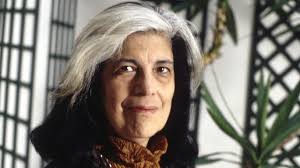
Susan Sontag 1933-2004


Illness is the night-side of life, a more onerous citizenship. Everyone who is born holds dual citizenship, in the kingdom of the well and in the kingdom of the sick. Although we all prefer to use only the good passport, sooner or later each of us is obliged, at least for a spell, to identify ourselves as citizens of that other place.    Sontag


Irene Tracey is Nuffield Professor of Anaesthetic Studies at the University of Oxford. She is also head of the Department of Clinical Neurosciences too. In a recent radio interview Professor Tracey said that one in five people living in economically developed countries suffer from ongoing, chronic pain. Furthermore, she continued, many medications for this condition are largely useless. 


One of the great merits of psychoanalysis is that it has questioned radically the distinction between the sick and the well -especially in that dimension of life now referred to as "mental health". The notion that most human beings need to be slightly neurotic, maladjusted, or off-centred in order to survive and adapt to the demands of Western civilisation seemed at first take rebarbative and somewhat insulting. Later -particularly after one massive dynastic war followed quickly by another with factory slaughterhouses for jews, communists, gypsies and gays- Europe seemed to have departed radically from “normal”  civilisation, progress, prosperity, and humane values. 

So maybe it was inevitable as the twentieth century wore on, that some psychoanalytic commentators were even more radically pessimistic about any reassuring "hard and fast" division between insanity and civilisation. They doubted whether it was true that only psychotics held a monopoly rights to “delusions” . Might delusional thinking accompany more seemingly “ordinary” phantasizing: whether it be about oneself, others, religion, country or one’s socio-political beliefs?

Two other common place binaries relativised by psychoanalysis are those of 

1. being in pain//pain free


2. pain//pleasure


Daniel Feeld is a movie writer and anti-hero in Dennis Potter's last television series Karaoke and Cold Lazarus. Remarkably in the history of UK television they were first televised on both Channel 4 & BBC 1 during 1996. Feeld is a sleazy, ill-tempered, obese, drunkard, who chain smokes and becomes obsessed with a much younger female called Sandra. Not an attractive being at all. However he firmly believes Sandra, a rough-diamond from the east-end who works in a Soho Hostess and Karaoke Bar, is speaking dialogue from a play Feeld is currently writing. Soon Daniel becomes a hundred per cent convinced that Sandra is not only speaking words he has written, but acting out the the actual plot of his drama in her everyday later. Is this really happening, is this a paranoid delusion of Feeld's, or may be a bit of both?

Daniel begins to suffer from crippling bouts of pain eased but a little by heavy drinking. Eventually a hospital doctor says he is terminally ill, with just a few months to live. Feeld remains erotically attached to the much younger Sandra; deeply in love with her for the remainder of his now shortened life. He revises his will leaving the majority of his wealth to Sandra. His head and brain were donated to an experimental cryogenic laboratory.


DVD COVER: KARAOKE & COLD LAZARUS


The sequel, Cold Lazarus, takes place centuries later in a dystopian Britain governed by the interests of financial conglomerates and business oligarchs. The cyro lab, with its collection of frozen bodies and heads, is now controlled by a media tycoon. Scientists working at the laboratory amazingly discover that Feeld's centuries' old head starts to respond with twitches when electrical and chemical stimuli are administered. Intermittent bouts of neural activity to occur. Eventually the head begins to relay music, speech, scenes from a life and society that no longer exists. This offers an incredible business opportunity to the media mogul who owns the laboratory. He plans to digitalise memories and scenes from Daniel's head, marketing them to a global audience.

The staff at the cyro lab begin to wonder. Are the ancient brain and head actually conscious and somehow alive? Do the memories now relayed to a huge cinema-style screen correspond to actual experiences and events? Is Daniel Feeld still a person?? Is he attempting to communicate with them? Their doubts, anxieties and questions intensify even more when the head relays scenes of physical and sexual molestation dating from Daniel's childhood. Astonished laboratory staff now become witnesses to profound physical and emotional trauma of a person's memories, who is somehow both dead and alive.

Last year a number of colleagues talked to this association about pain and trauma … how it might (or might not) relate to clock time, geographical places, bodies, experiences, and brains. It is my own belief that human beings live in a variety of histories and spaces simultaneously. Take time. One might experience time passing quickly when enjoying a good movie. Walking leisurely on an Autumnal stroll, one suddenly may recall vividly, long forgotten incidents from times past. On other occasions time may be experienced as dragging or pushing or monotonous. Space likewise. In a crowded elevator or waiting in airport queue one might feel hemmed in; yet visiting a spacious cathedral like Liverpool’s famous circular Catholic building, one may feel one’s body-space expand. As well as times past, there are spaces past I still recall. Every time I visit Liverpool's Anglican cathedral I am aware of  the spacial configuration at its side entrance. Old multi-racial tenements once crowded round. From gothic vast space, to crowded dwellings was a massive spatial contrast (or more correctly, shock) for me that I still recall. Within living memory these buildings containing an entire neighbourhood, as well as an Islamic place of worship,  were bull-dozed because of slum-clearance orders. Eventually they were replaced by exclusive buildings for cathedral staff and universities; a very different social configuration of space.


Artist's impression of former working class dwellings in front of Liverpool's Anglican Cathedral
http://www.strawberryfieldsart.com
Maybe people lead lives encompassed within lots of different co-ordinates or “sub-universes”, some of which may be more obvious and accessible to the individual than others. One central coordinate will alway's be one’s body -along with the real, imaginary, ideal, and symbolic bodies that embody its "me". Pain is “located” in, and distributed though, any -or all- of these somatic/psychological sub-universes.


There are copious amounts of humour and  in Potter's Karaoke and Cold Lazarus. For example, 

Both Karaoke and Cold Lazarus are rich in irony. Love changes the drunkard and aggressive Daniel into a likeable human being. For the the first time in his life he falls in love: for the few remaining months of his life. Even his moral code shifts from total self-centredness, to bravery and altruism. Both plays contain tragedy and copious amounts of comedy alongside pain, pleasure, hurt and tragedy. My previous remarks about the relativisation of pain and pleasure brought by psychoanalysis does not support a cynical view that people suffering enduring, chronic, and terminal pain are really having a surreptitious joke maybe or a  “good time” at the expense of their medics and loved ones. I use Potter's plays to illustrate how the borders of pleasure//pain and pain//pain-free are often fuzzy. This has been known well in medicine with the notion of secondary gain. In hard times necessity may be turned into a virtue.

I am not going to speculate about the causes or origins of pain: more about its presence and distribution. Despite a women recently discovered to be genetically predisposed to experience minimal pain, her phenomenon does not imply all pain is determined and caused by genetic variation. Nor does it imply that all pain is going to be eliminated by genetic therapies. As far as I understand, most pain consultants and scientists  like Professor Tracey, seem to teach that pain is a multidimensional experience -or series of experiences- involving body, beliefs, social networks, emotionality, expectations.

Pain therefore is experienced in different ways by varied subjects: nevertheless I would suggest that pain is a near universal feature of all embodied beings.

The Macmillan Cancer Support Website, for instance, mentions different types of pain:

Acute pain often starts suddenly and feels ‘sharp’. It can be caused by many different things, such as: 
  • an operation
  • a broken bone
  • an infection.
Acute pain is usually short-term, but it can sometimes last for weeks or months. Most acute pain will go away when the reason for the pain has been treated or the tissues have healed. If acute pain is not relieved, it may become a chronic pain.

Chronic pain lasts for a longer period of time. It’s usually caused by the cancer itself, but it can sometimes be caused by the longer-term effects of cancer treatments.

Breakthrough pain is a sudden pain. It sometimes ‘breaks through’ when chronic pain is being well-controlled with long-acting painkillers.
It may be brought on quite suddenly by an activity, such as moving or coughing. It may happen when the effect of the regular painkiller wears off. Sometimes it’s not clear why someone has breakthrough pain. Breakthrough pain is common, but it can usually be successfully managed. It is treated with short-acting painkillers.

Bone pain If cancer is affecting a bone, it can cause pain. The cancer may have started in the bone (primary bone cancer) or spread there from another part of the body (secondary bone cancer). The pain may be a dull, persistent ache that doesn’t go away. It can happen during the day as well as at night.

Soft tissue pain is pain we feel when our organs, muscles or tissues are damaged, injured or inflamed. An example is when the liver becomes enlarged, causing pain and discomfort in the tummy (abdomen). Soft tissue pain is also called visceral pain.


Nerve pain is caused by nerve damage. It may be due to the cancer or cancer treatments. The pain can often continue even when the cause has been treated. Nerve pain is also called neuropathic pain. Like many types of pain, nerve pain can come and go. Often the area feels numb or more sensitive. You may describe it as:

  • burning
  • stabbing
  • shooting
  • tingling. 
  • There are specific medicines and treatments used to treat nerve pain.

Referred pain. This is when pain from an internal organ can be felt in a different part of the body. For example, if the liver is enlarged, it can cause pain in the right shoulder. This may happen because pain messages from the liver travel along the same nerve pathways as messages from the skin. The brain confuses them and thinks the pain is coming from a different place.


Phantom pain  is when the brain ‘feels’ pain in a part of the body that has been removed. It can sometimes happen after surgery to amputate an arm or a leg, and occasionally after a breast is removed (mastectomy). Phantom pain may feel like cramping, stabbing or burning, but can cause many different pain sensations. Many people find that phantom pain gets better with time and may eventually go away. But some people find that the pain can affect them for a long time. It is important to let your doctor or specialist nurse know about phantom pain because there are specific medicines that may help.

Total pain is a term doctors and nurses use to describe all the different parts of a person’s pain. This includes how the pain affects, and can be affected by our:
  • emotions
  • behaviours
  • spiritual beliefs
  • social activities.


A parent asking a child “where does it hurt?” is of necessity asking a simple question. However the “whereof?” of pain is intrinsically complicated, particularly from a psychoanalytic perspective. The same applies to its "whereunto".

*****************************

“Where does it hurt?” as well as referring to physical pain and its language that is organised by fantasies, trauma, social conventions or expectations, dysfunctionalities etc. there is also another -more-or-less statistically organised- concrete reality; namely that where? of social geography. I refer to the chart from the Sunday Times in February this year (2019).


https://www.thetimes.co.uk/article/britains-opioid-crisis-we-are-sleepwalking-towards-carnage-in-our-communities-7tjlzzq7x


 What does this map say about pain, pain-killers, where it hurts and deaths?

There are considerable differences amongst opioid death rates amongst UK regions from 1.8 in London to 6.2 in the North East. You will also see that prescribing rates for opiates are higher in areas of England and Wales from the midlands upwards. The only southern city appearing in the top ten is Yarmouth. So why this vast difference? Why does it hurt more in Blackpool than in London?

A second, more general question, relates to the now very common word "painkillers". These are substances prescribed by doctors or purchased at pharmacies or, more clandestinely, on the dark web or black market, with the hope of eliminating pain -if only temporarily. They do not “kill pain” because pain in many acute conditions are bound to return when neutralising effects wear off. They are Lazarus-like in their effect. Maybe  "pain controllers" or "pain relievers"
or "pain modifiers" are more accurate descriptions than the deceptive adjective “killer”. Be that as it may, many of these substances do in fact kill when taken regularly or in sufficiently high doses. Sometimes this happens in palliative care when the person who is already being killed by disease, has life expectancy reduced even further by prescribed opiates to numb pain and (perhaps) consciousness too. In addition to palliative care, people do overdose and kill themselves -whether intentionally or not- by using pain control substances.

A third question is this. Who are these people that are hurting so much? One may wish to categorise them amongst the ranks of "traditional junkies" or heroine users. The trouble with this characterisation is that people who started to use street drugs decades ago are now older. They have relatives -husbands, wives, partners, children. In both Scotland and towns of the USA entire families are wiped out. Furthermore there are many who are not traditional “junkies” but, for example, your parents, grand-parents, or great-grand parents suffering from a variety of chronic complaints related to ageing -such as arthritis, fractures, back pain, rheumatism, diabetes, incontinence, muscular degeneration, post-treatment conditions (following surgery, chemotherapy etc).  For many chronic sufferers the trendier alternatives  …..like acupuncture, mindfulness, short-term counselling, meditations, cognitive behavioural recipes, and massages..... are not available and not affordable. Hard-pressed GPs working in areas where demands for pain control are overwhelming …may feel that tablets are the best thing they can offer in the circumstances: even though the risks associated with addiction are greatly increased.

A fourth question is this:  what impact does the presence of enduring pain and medication have on -for want of a better word- on mental health? Chronic pain lasting for decades is bound to impact the “mental health” of individuals. It can be an extremely depressing and de-spiriting accompaniment to life for ageing populations throughout the globe (not just Europe and America). Recalling the warning of Professor Tracey, the efficacy continued opiate dosing for chronic pain lacks strong evidence -in fact the reverse is the case.  Though opiates are brilliant for acute and terminal pain, long term use regularly produces other effects such as reduced fertility, low sex drive, irregular periods, erectile dysfunction, depressed immune responses, and, paradoxically, increased levels of pain.


It seems to me fake or delusional notions about health and suffering are demanded by populations and have been retailed by governments, therapy trainers/providers, various psychology experts, as well as international pharmaceutical companies whose complicity in causing misery is now being tested in law courts . These canvassed the view that pain and suffering -whether physical, emotional or mental- can easily be altered by cheap, quick and inexpensive therapies -particularly psychological ones- or the administration of drugs commercially advertised on a massive scale.

My final observation is this. Pain, mental health difficulties, physical suffering, are as much political issues as they are individual concerns. It is absolutely imperative that they remain so and that psychotherapies -or pharmacological substances- do not allow themselves to become a political opium for the masses promoting quietism. Pain and sufferings are not simply issues for psychoanalysis, theory, counselling, pharmacology. They are urgent political and social concerns. In the words of the Daily Express reporter, Chris Riches in his article  Pill hell: The poor are prescribed most painkillers (15 January 2019)


Nearly 24 million opioids, such as codeine, fentanyl and morphine, were prescribed in 2017 - equivalent to a staggering 2,700 packs an hour. The drugs can help with pain after major injuries or surgery - but are often unnecessarily doled out for arthritis or back pain instead. Researchers at the universities of Manchester and Nottingham analysed which areas of England saw the most opioid painkillers prescribed.

GPs in Blackpool, Lancashire, and St Helens in Merseyside, prescribed the highest levels of opioids in the whole of England, the study found. Public Health England's (PHE) "Health Profile for England 2018" revealed residents in Blackpool have the lowest life expectancy in England. PHE data found residents of the seaside resort only lived to an average 76 years and 11 months, five years less than the UK average of 81 years and seven months. Meanwhile, those in the wealthy London borough of Kensington and Chelsea lived the longest, on average for 85 years and one month.

https://www.express.co.uk/news/uk/1072717/pill-alert-study-painkillers-poor-patients-health-NHS

References and Notes


The quotation is from the introduction to Sontag’s Illness As Metaphor 1978 FSG. See also Regarding the Pain of Others 2003 FSG

Irene Tracey interviewed on the World Service Monday 22nd July 2019 https://www.bbc.co.uk/programmes/w3csz4y. An incredibly adventurous brain scientist, Professor Tracey testifies that the actual experience of a subject's pain is bound to differ from individual to individual according to experience, history, personality and beliefs. She received a very unfortunate nickname "The Queen of Pain". In 2016 BBC News, the Guardian, and Daily Mail reported on a study suggesting that as many as 50% of the adult UK population suffer chronic painhttps://www.bbc.co.uk/news/health-36574299 


A NICE report in 2018 stated:

 There is no medical intervention, pharmacological or non-pharmacological, that is helpful for more than a minority of people with chronic pain, and benefits of treatments are modest in terms of effect size and duration.
 Additional morbidity resulting from treatment for chronic pain is not unusual, so it is important to evaluate the treatments we offer for chronic pain, to focus resources appropriately and to minimise iatrogenic harm.
 The complexity of chronic pain and the association with significant distress and disability can influence clinical interactions. People often expect a clear diagnosis and effective treatment, but these are rarely available. GPs and specialists in other fields find chronic pain very challenging to manage and often have negative perceptions of people with pain. This is despite the fact that in every specialty there are some people with chronic pain. This can have important consequences for the therapeutic relationship between healthcare professionals and patients.

https://www.nice.org.uk/guidance/gid-ng10069/documents/final-scope


The IT  in "where does it hurt" may also be capitalised. Here the It, of course, refers to Das Es in Freud's mature mapping of the psyche. Though unpopular amongst some psychoanalysts, I have often found many people do in fact refer to themselves, their pains, desires, fears, conflicts, or difficult emotions as IT. See Freud's famous The Ego and the Id and the introductory article on this topic in Wikipedia https://en.wikipedia.org/wiki/The_Ego_and_the_Id.  Check also No Subject for a lacanian approach to Ego https://nosubject.com/Ego

Universal Delusion

An eye-catching popular article was headed: Creating Hallucinations Without Any Drugs Is Surprisingly Easy. It was published in Science Alert August 2019. Deprived of stimulus or subjected to monotonous stimuli, researchers found hallucinations are very easily induced in human beings.

Universal delusion refers to the theorising of Jacques Lacan in later work, but equally well explored in countless works of literature and not just by James Joyce. Samuel Becket in Waiting for Godot for example, maintains we are born mad and remain so for the rest of our lives. Lacan’s formulation from dated October 1978 states tout le monde est fou, c’est-à-dire, délirant; everyone is mad, that is to say delusional. Much debate has been inspired by this phrase….for example, what are the differentials between clinical psychosis and ordinary delusional thinking if any? In reality this debate oscillates between two perspectives on subjectivity. The Subject as complex speaking/writing/ thinking/embodied being and, second, Subject as structure.


 Dennis Potter (1935-1994) used his considerable talents as a journalist and dramatist to investigate physical illness, memory, subjectivity, pain, and traumatic life events in both Karaoke and Cold Lazarus of 1996. Whilst writing these plays Potter nursed a wife suffering from breast cancer. Shortly after she died, Potter himself died from pancreatic and liver cancer. 

Experiencing little pain due to genetic variation. See the recent accounts and testimony of Jo Cameron: https://www.bbc.co.uk/news/uk-scotland-highlands-islands-47719718

Opioids are morphine and morphine-like medicines such as tramadol, oxycodone, fentanyl, buprenorphine and tapentadol are known as opioids. One group is termed natural, another synthetic. For the clinical uses and limitations of opioid treatment check the website of the Faculty of Pain Medicine https://www.rcoa.ac.uk/faculty-of-pain-medicine. There is a detailed section for clinicians and public entitled Opioids AwareMy list of side effects associated with long term opioid use is taken from the website above. One of the earliest patients of the nascent psychoanalytic talking cure, Anna O, was addicted to prescribed medications.  See my blog about the psychoanalytic case history.

Finally, I need to mention that psychoanalysis has its follies too. One author (Reich) felt that Sigmund Freud’s own mouth cancer was caused by sexual repression. Another colleague and friend of Freud’s, George Groddeck (1886-1934), believed all and every physiological symptom of his patients (including cancer) as arose from the unconscious and, or, other psychological factors. In treatment he used both massage, hypnosis or his own form of psychoanalysis. He called this treatment integrationist. It seems to me he was not only doctoring, but offering a doctrine of salvation … or in modern terms, total happiness. Psychoanalysis, he thought, taught exactly the same as Jesus.  Nevertheless many notable people claimed to have been healed by Groddeck. His unusual  book of 1923 Das Buch vom Es took the form of a series of letters addressed to an imaginary girlfriend. Groddeck too wrote novels. Der Seelensucher. Ein psychoanalytischer Roman of 1921 was probably the first psychoanalytic novel ever published (anticipated, though, by Freud's early case histories)

Groddeck's presumption that all physiological symptomatology originates in the unconscious, seems a little extravagant to me. Sometimes a cold is just a cold.

Pain and Mental Health. A recent NICE report reckoned that around half the people diagnosed with chronic pain also suffer depression. 
https://www.nice.org.uk/guidance/gidig10069/documents/final-scope

Mental Health and Politics. See Mark Fisher 2012 Why mental health is a political issue
https://www.theguardian.com/commentisfree/2012/jul/16/mental-health-political-issue


UPDATES

1.Reports from health observers in Scotland suggest some 1,187 people died from drug-related problems last year. The New York Times reported how these deaths occurred mainly amongst "The train-spotting generation", meaning long-term users of opioids and benzodiazepines, now in their forties. One pharmacist comments  “We’re seeing diseases that you would associate with old age in a lot of these middle-aged men with a long history of drug use .......What your body tolerates at 18 it doesn’t tolerate at 38 or 48.” See The New York Times 8 August 2019

2. Companies that marketed "pain" medicines in the USA are now receiving increased judicial attention. It is alleged such commercial organisations were well aware they were creating  more individual suffering as well as massive social problems. See for example, Johnson & Johnson Twisted the Truth. New York Times August 29 2019.

3. Public Health England published a report on 10/9/2019 on regularly prescribed medicines linked to pain control and depression. These were:

benzodiazepines (mainly prescribed for anxiety and insomnia)
Z-drugs (insomnia)
gabapentinoids (neuropathic pain)
opioid pain medications (for chronic non-cancer pain such as low back pain and injury-related and degenerative joint disease)

antidepressants (depression)

https://www.gov.uk/government/news/dependence-on-prescription-medicines-linked-to-deprivation

During 2018 one in four adults had received a prescription for one of these medicines. The report confirmed the link to deprivation and also indicated that prescribing rates are much higher amongst women and elderly adults. Trends suggest most of  these are being prescribed less, but there  increased use of anti-depressants and medicines for neuropathic pain.


c.Simon Fisher September 10th 2019

A brief note on Wittgenstein.

  Wittgenstein in 1929 photograph in public domain Wikipedia My appreciation of this philosopher was enhanced even more by the recent public...